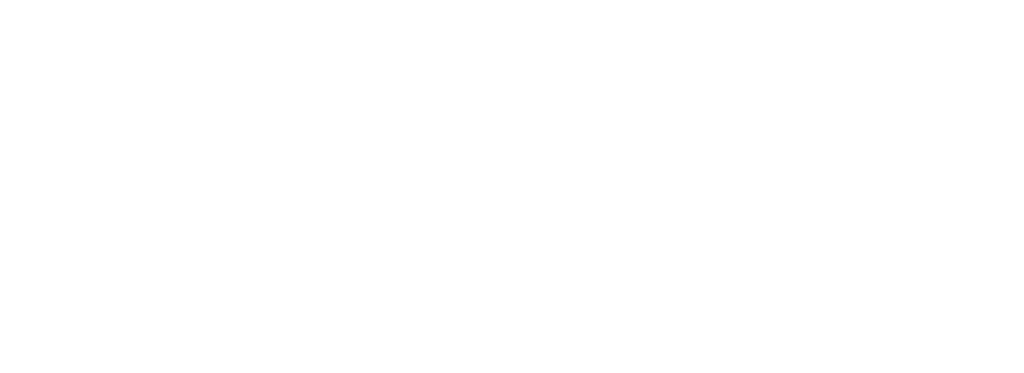
Upcycling Lab
Upcycling for a Better Future
Redefining Fashion through Social Synergy
In an era where the environmental and social costs of “fast fashion” have become impossible to ignore, BRAINSHOT presents “Upcycling for a Better Future.” This four-week experiential workshop series, held at the historic Theotokopoulou House, serves as a manifesto for circularity, inclusivity, and creative rebirth.
Presented in strategic partnership with Modistra Hopemade, the social enterprise arm of the Support Network for Imprisoned and Ex-Imprisoned Women, this laboratory transcends traditional craft. It is a space where the act of unravelling a thread and re-stitching a seam becomes a metaphor for personal and community transformation.
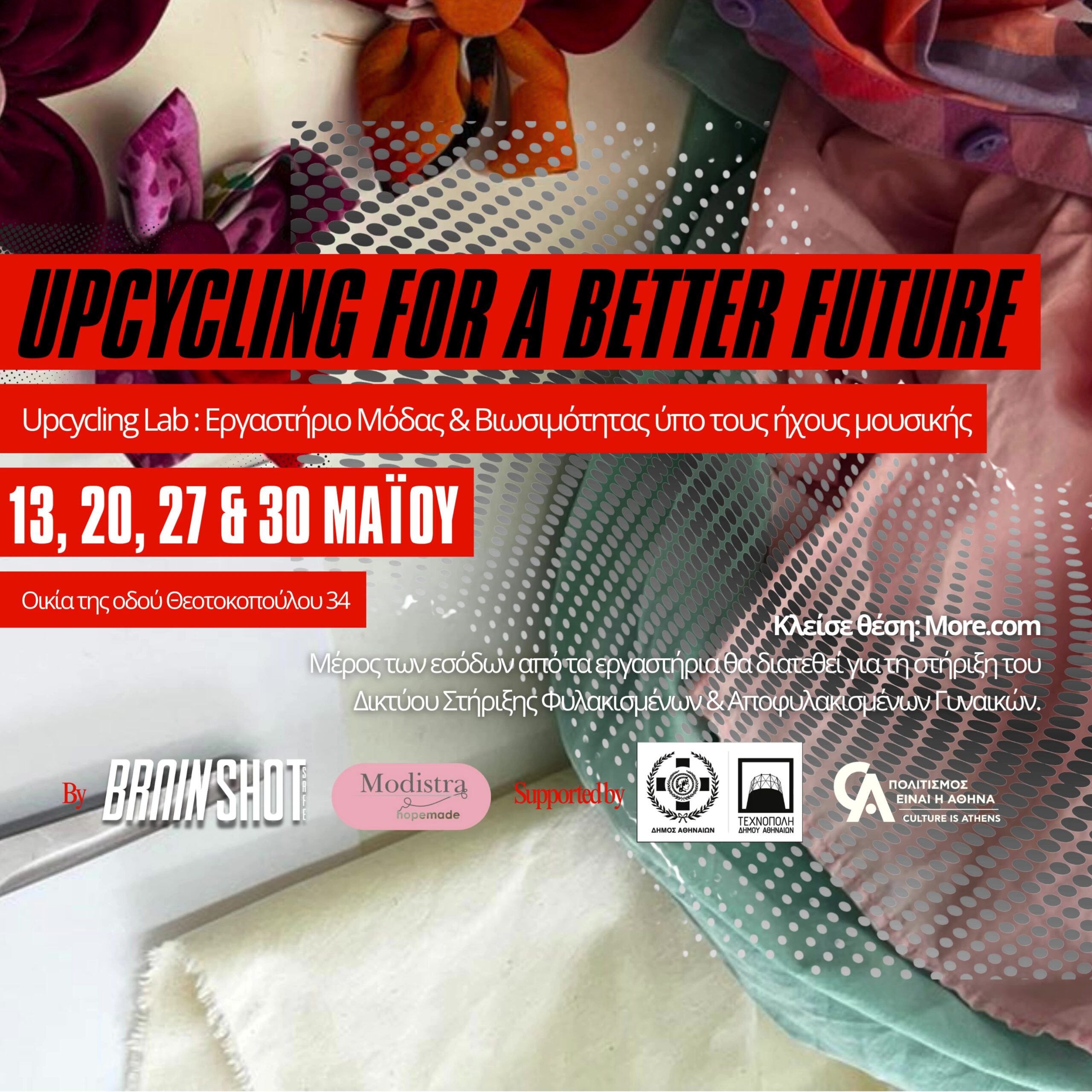
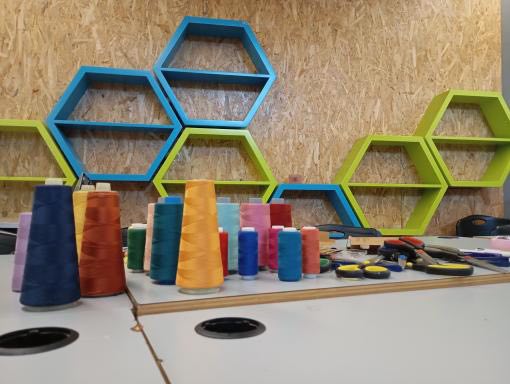
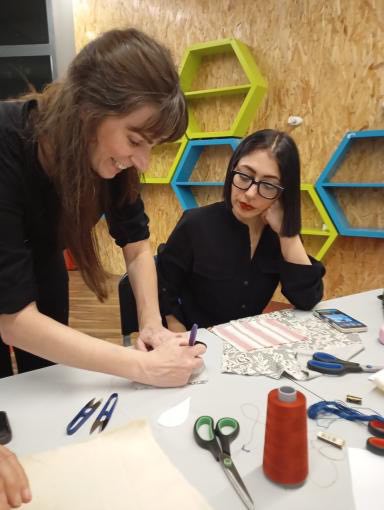
Vision and Collective Mission
The core philosophy of Upcycling for a Better Future is summarized in three verbs: Create. Transform. Redefine. The project challenges the linear “take-make-waste” model of the modern economy by treating every discarded fabric as a carrier of potential.
The collaboration with Modistra Hopemade is central to this vision. As a social enterprise dedicated to ethical fashion and the professional integration of women within the justice system, Modistra Hopemade brings a layer of profound social responsibility to the workshop.
Participants do not just learn from “experts”; they engage in a peer-to-peer exchange with women whose lives and livelihoods have been reshaped through the very skills being taught.
A portion of all workshop proceeds is directly reinvested into the Support Network, ensuring that the act of creation outside the prison walls supports the journey of empowerment within them.
By merging the tactile art of textile transformation with the rhythmic power of sound, the project seeks to prove that sustainability is not just a trend, but a collaborative pathway toward social justice and environmental health.
The Laboratory Experience: Aesthetics and Sound
One of the most distinctive features of the BRAINSHOT Upcycling Lab is its multi-sensory environment. Recognizing that creativity is fueled by atmosphere, every session is accompanied by a curated musical journey.
Just as the fabrics are being deconstructed and reborn, the music undergoes a parallel transformation. Each two-hour session begins with classical or foundational sounds that gradually evolve, through modern melodies and electronic layers, into a contemporary sonic landscape. This auditory “upcycling” mirrors the physical work on the tables; it reminds participants that history—whether in a song or a garment—is not a static relic but a living material that can be reinterpreted through imagination.
Methodology: Hands-on Transformation
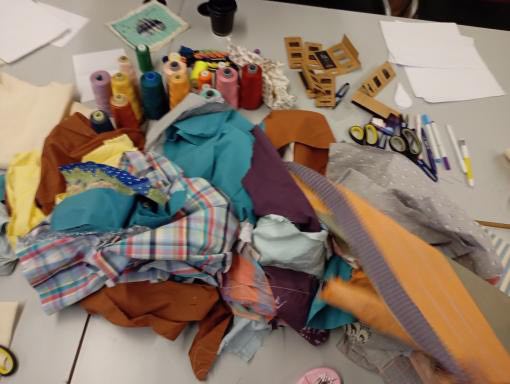
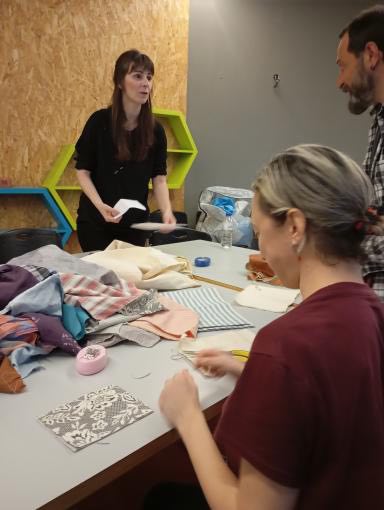
The workshop series was designed to be modular and inclusive, allowing participants to attend individual sessions or the full four-week cycle. Each meeting, held between May 13 and May 30, focused on specific techniques of sustainable modification:
- Material Deconstruction: Learning to identify the “DNA” of a garment—understanding seams, grain lines, and textile composition to determine how it can be safely dismantled.
- Creative Reshaping: Moving beyond simple repairs to radical transformations. This involves using advanced tailoring techniques and the “hopemade” ethos to turn old trousers into bags, or oversized shirts into structured contemporary pieces.
- Ethical Craftsmanship: Guided by the Modistra Hopemade team, participants gain insight into “Slow Fashion” practices, focusing on quality, durability, and the ethical implications of the materials we choose to wear.
Impact: Social Sustainability and Inclusion
“Upcycling for a Better Future” is a cornerstone of the BRAINSHOT S.A.F.E. (Sustainability, Art, Fashion, Education) model. By hosting the event at the Theotokopoulou House in Ano Patisia, BRAINSHOT reclaimed a neighborhood space for high-level social intervention.
The project achieves three specific impacts:
- Environmental: Directly reducing textile waste by providing citizens with the practical skills to extend the life of their wardrobe.
- Social: Providing a platform for the women of Modistra Hopemade to share their professional expertise, thereby breaking the stigma surrounding ex-imprisoned individuals and fostering a truly inclusive community.
- Economic: Creating a sustainable revenue stream for the Support Network through ticket sales, proving that cultural events can function as effective social fundraising tools.
At its conclusion, the workshop series leaves behind more than just physical garments. It leaves behind a community of empowered individuals who no longer see “waste,” but “opportunity.” Upcycling for a Better Future demonstrates that when fashion meets social conscience, the result is a vibrant, living experience that honors the past while actively building a more equitable and sustainable tomorrow.
Through the intersection of needle, thread, and melody, BRAINSHOT and Modistra Hopemade invite the public to see themselves not as consumers, but as creators of a better future.